Unismuh Mathematics Education Program Hosts Guest Lecture, Features UPSI Malaysia Academic
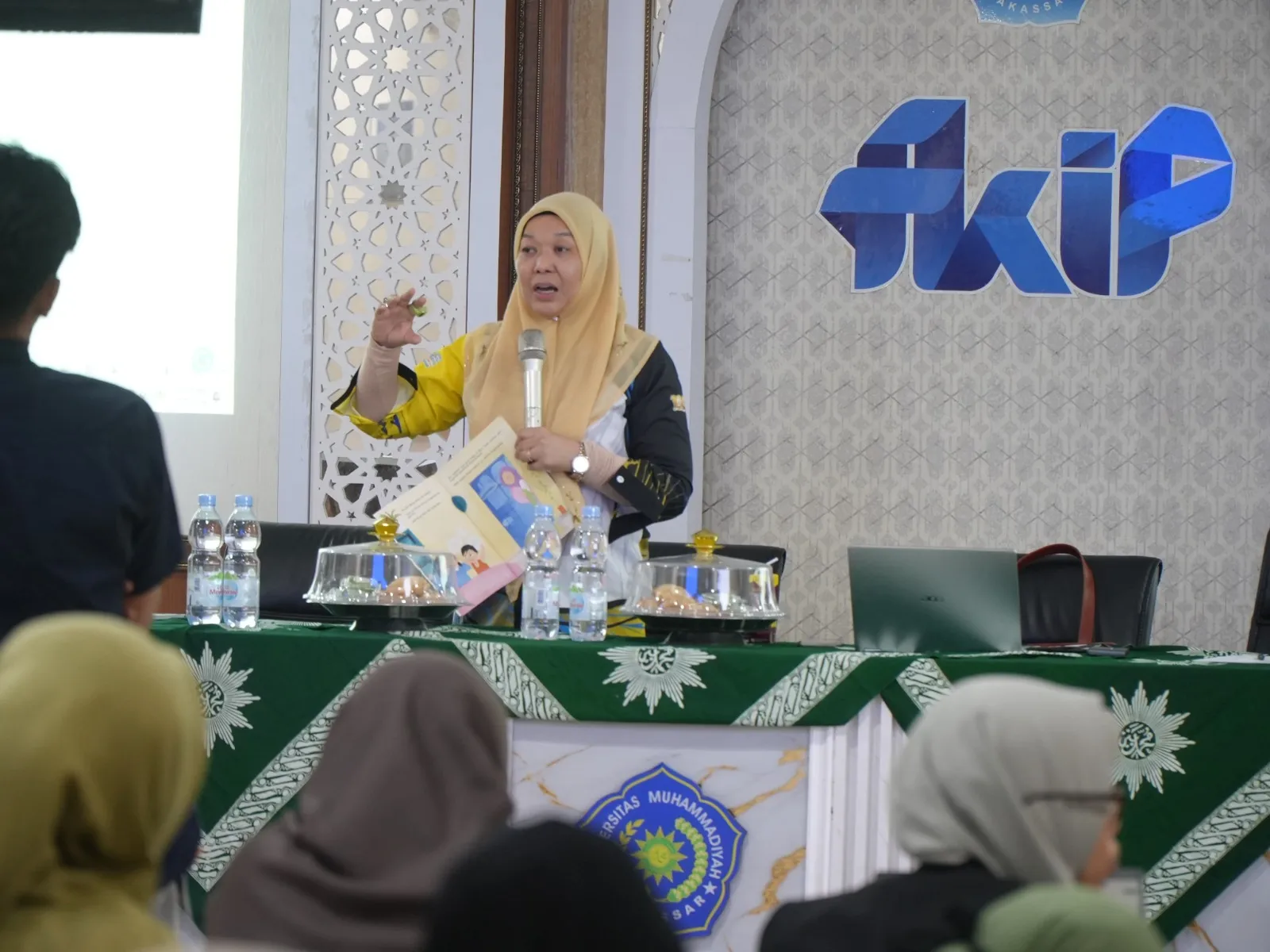
UNISMUH.AC.ID, MAKASSAR — The Undergraduate and Graduate Study Programs in Mathematics Education at Muhammadiyah University of Makassar (Unismuh) held Guest Lecture 2 with UPSI academic, Prof. Madya Dr. Siti Rahaimah binti Ali from Universiti Pendidikan Sultan Idris, Malaysia, at the Mini Hall of the Faculty of Teacher Training and Education (FKIP) at Unismuh Makassar on Tuesday, July 7, 2026.
The event was attended by lecturers as well as undergraduate and graduate students of Mathematics Education to strengthen their understanding of numeracy, fun mathematics learning, and the development of teaching media based on stories, games, and technology.
The guest lecture was part of a series of visits by the UPSI delegation to Unismuh Makassar from July 6–9, 2026. The agenda also served as a preliminary academic session prior to the International Joint Seminar themed "Transforming the Future of Education: Integrating Exact Sciences, Social Sciences, and Curriculum" at Hall I-GIFt Unismuh Makassar.
According to the visit itinerary document, the UPSI delegation arrived in Makassar on Monday, July 6, 2026, via Sultan Hasanuddin International Airport. On Tuesday, July 7, 2026, Unismuh Makassar held three parallel guest lectures from 10:00–11:45 WITA (Western Indonesia Time) for the curriculum and science education, mathematics education, and sociology education fields.
Within that series, Prof. Siti Rahaimah delivered the guest lecture hosted by the Undergraduate and Graduate Study Programs in Mathematics Education at Unismuh Makassar. The other two guest lectures featured Prof. Madya Dr. Norazilawati binti Abdullah for the curriculum and science education field, and Prof. Madya Dr. Norwaliza binti Abdul Wahab for the sociology education field.
Prof. Siti emphasized that numeracy should not be narrowly understood as mere calculation skills. According to her, numeracy is the ability to apply mathematical knowledge in daily life, so its teaching needs to be connected to students' concrete experiences.
"We apply this numeracy by using these mathematical concepts in our daily lives," said Prof. Siti during the guest lecture. She explained that while formal mathematics does cover number recognition, arithmetic operations, fractions, money, objects, and statistics, children need to be introduced to it through methods that align with their world.
Prof. Siti stated that mathematics learning can begin with simple things such as shape recognition, surrounding objects, games, and stories. She gave the example that basic shapes like squares, triangles, and circles can be introduced through play activities before the teacher explains the mathematical concepts.
In the teaching materials she develops, Prof. Siti incorporates mathematical elements into storybooks. She does not always label them as math books so that children do not feel burdened by the term "mathematics" beforehand.
"We apply these numeracy elements indirectly, not directly," she explained. According to Prof. Siti, this indirect approach makes it easier for children to grasp mathematical concepts because learning occurs through enjoyable activities.
She also gave the example of using play materials like dough or plasticine to create objects. From these basic shapes, children can be encouraged to combine forms into tables, rice fields, airplanes, or other familiar items.
Prof. Siti explained that teachers or prospective teachers can then ask students to recall what shapes were used. In this way, children learn geometric concepts without feeling like they are facing a rigid subject.
During the Q&A session, one participant asked how to make students love mathematics. Prof. Siti replied that love for mathematics cannot be forced from the start but must be built through a pleasant introduction process.
"Love comes later. We observe first, we get to know it first, and then the feeling of love arises," said Prof. Siti. She added that children will not enjoy mathematics if they are not given the opportunity to get to know it in a friendly and engaging manner from the beginning.
Prof. Siti mentioned that her 10 years of experience as a primary school teacher helped her understand children's difficulties in learning mathematics. She noted that certain topics, especially fractions and basic operations, often pose obstacles for students.
For fraction instruction, Prof. Siti explained that one approach that can be used is the bar model. She noted that this approach can help children understand fractions more concretely before moving on to formal symbols and operations.
Prof. Siti also addressed the changing learning characteristics of the current generation, who are very close to smartphones, YouTube, and games. According to her, teachers should not merely ban technology but need to understand students' digital habits and use them as an entry point for learning.
"If you are a prospective teacher, use that as an emotional hook, as a class opener," said Prof. Siti. She reminded that digital content can be used as a learning introduction to capture students' attention, provided it is selected according to the objectives, topic, and students' age.
She emphasized that prospective mathematics teachers need to be creative in selecting learning media. According to Prof. Siti, videos, games, apps, and stories can serve as aids, but teachers must still ensure that these media support the achievement of mathematical competencies.
During the discussion, participants also asked about the process of developing the learning applications worked on by Prof. Siti. She explained that the development of books, modules, games, and learning applications generally stems from research grants.
Prof. Siti stated that she prepares the ideas, content, and learning storyboards, then collaborates with research assistants or students who have expertise in multimedia and gamification. Thus, educational innovation is not developed individually but through cross-disciplinary collaboration.
"The content is mine. The storyboard is mine. For the development, I find multimedia students," she explained. She emphasized that application development requires collaboration between educational content experts and technology developers.
Prof. Siti also explained that research assistants involved in application development usually possess technical skills, including in developing APK-based games. According to her, lecturers can serve as designers of content and pedagogical flow, while multimedia developers help turn concepts into digital media.
That explanation delivered a message to Unismuh Makassar Mathematics Education students that learning innovation can be developed through collaborative work. Students can design numeracy content, while technical development can be carried out alongside those who master educational technology, multimedia, or gamification.
This guest lecture also opened opportunities for further cooperation between Unismuh Makassar and UPSI academics. During the discussion session, participants mentioned the possibility of inviting Prof. Siti to participate in joint activities with the education department, teacher training, community service, or collaborative research in Makassar and South Sulawesi.
Prof. Siti welcomed the opportunity and expressed openness to further cooperation. She cited teacher training, cooperative learning, pedagogy, and the development of numeracy teaching materials as some of the fields that can be developed together.
The connection of this guest lecture to the International Joint Seminar was evident in the substance discussed. Prof. Siti not only presented mathematics as an exact science discipline but also connected it to curriculum, pedagogy, children's learning culture, technology utilization, and students' social needs.
Through this event, the Undergraduate and Graduate Study Programs in Mathematics Education at Unismuh Makassar strengthened its international academic space while promoting more contextual mathematics learning. The series of cooperation with UPSI is expected to continue in the form of teacher training, numeracy media development, joint research, and academic programs that will directly impact primary education and mathematics education in Indonesia and Malaysia.
Sustainable Development Goals

Related News
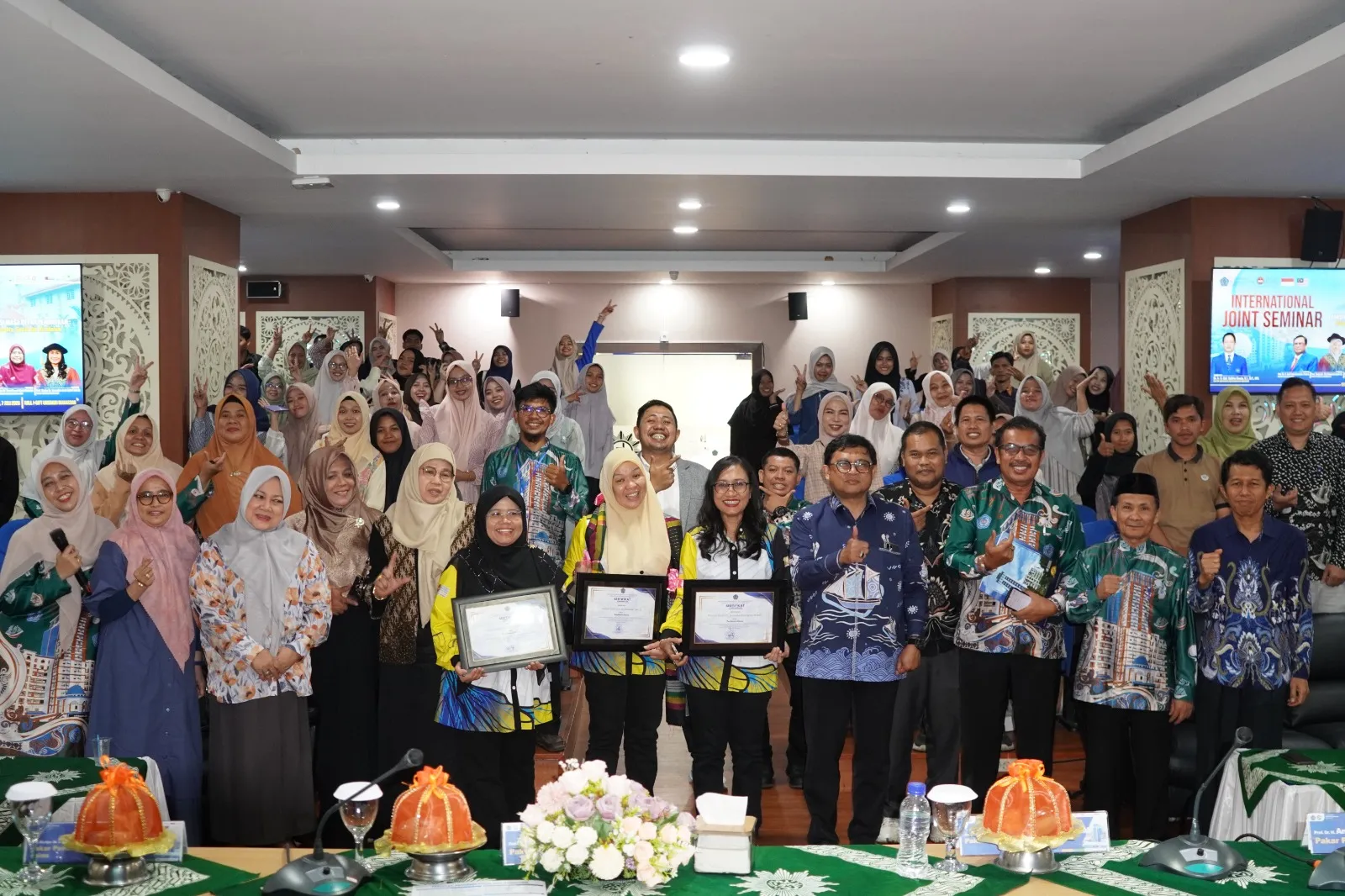
Seminar Internasional Unismuh Makassar-UPSI Malaysia Bahas Mengapa Teknologi Tak Bisa Gantikan Guru
08 Jul 2026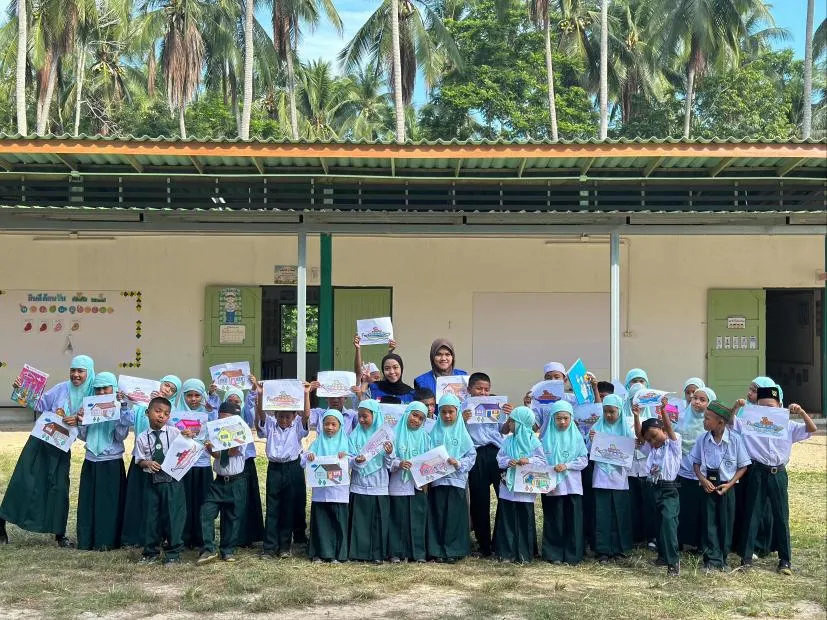
Prodi Pendidikan Matematika Unismuh Dorong Pembelajaran Digital di Thailand
25 Jun 2026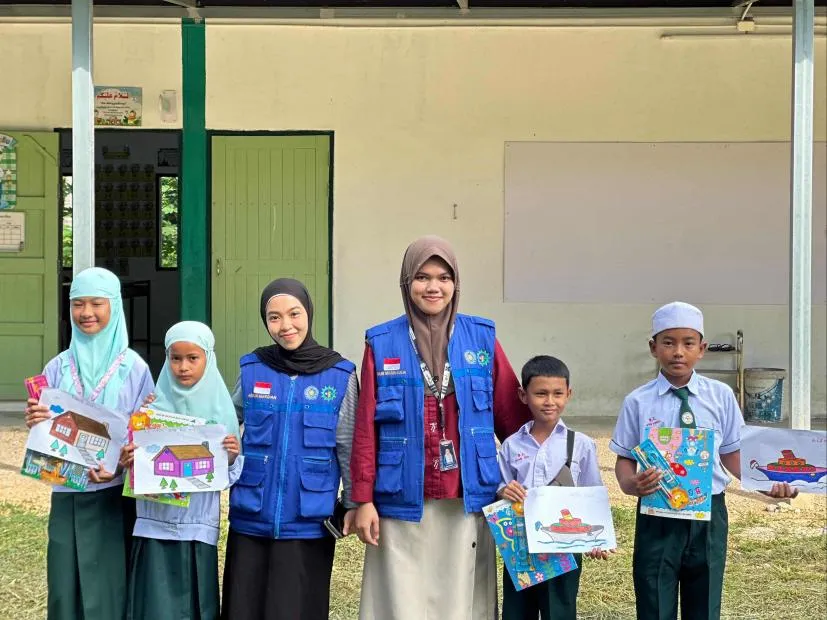
Prodi Pendidikan Matematika Unismuh Dorong Pembelajaran Digital di Thailand
21 Jun 2026